Home › Speed Bumps, Curbs, and Asphalt Accessories
Prestige Asphalt Austin installs asphalt speed bumps in Austin, TX along with curbs, wheel stops, and other parking lot accessories. We design and place traffic calming features to slow vehicles and protect pedestrians and buildings. Our team shapes asphalt or installs pre formed devices, then ties everything into your existing pavement. Property managers trust us to improve safety while keeping access clear for customers, deliveries, and emergency vehicles.
Prestige Asphalt Austin provides professional asphalt speed bumps throughout Austin, TX and the surrounding area. Our licensed, insured crew delivers safe, clean, on-time work with a free estimate before anything begins. Call (737) 265-1348 or request your free quote.
Practical Traffic Control Solutions for Austin Properties
If you manage a parking lot, private drive, or community in Austin, you already know that paint and signs alone rarely slow drivers down. Properly designed asphalt speed bumps, curbs, and related accessories give you physical control over how vehicles move on your property.
Prestige Asphalt Austin focuses on installations that match real-world conditions in Central Texas. We look at slope, drainage paths, fire lane requirements, and daily traffic patterns before recommending any layout. A speed bump that works on a flat office lot in North Austin may be a problem on a sloped Hill Country driveway in Westlake, so we do not copy and paste designs.
On this page, we break down how we install asphalt speed bumps, curbs, and accessories, what affects pricing, and what you should decide before anyone brings equipment on site. The goal is to give you enough detail to avoid the most common mistakes we see across Austin properties.
How Asphalt Speed Bumps Are Designed and Installed
A safe speed bump starts with design, not asphalt. When Prestige Asphalt Austin reviews a property, we measure lane width, turning radiuses, clearances for delivery trucks, and typical vehicle types. An apartment complex with a lot of low-slung cars needs a different profile than an industrial yard where most traffic is box trucks.
We typically install asphalt speed bumps in these steps:
1. Layout and marking: We snap chalk lines or paint the bump footprint, usually 12 to 14 inches wide for true speed bumps and up to 3 feet for wider humps. We confirm that fire lanes and accessible parking routes remain compliant with local codes.
2. Surface prep: We clean the existing asphalt and remove loose material. If the surface is cracked, oxidized, or has potholes, we patch and compact those areas first so the bump bonds well. Installing on a failing surface is a shortcut that will not last through a couple of Austin summers.
3. Bump build-up: We place hot mix asphalt in lifts, shaping the bump with lutes and asphalt rakes. Height is usually between 2.5 and 3.5 inches at the center, tapered to avoid tire damage and scraping. We adjust slope if we know frequent trailer traffic will pass through.
4. Compaction: Using a vibratory roller or plate compactor, we compact the bump until it is dense and smooth. Proper compaction is where many cheap installs fail. If the bump is too loose, August heat in Austin will deform it and create ruts.
5. Striping and reflectivity: After cooling and curing, we apply high-visibility traffic paint, usually yellow with white reflective beads or thermoplastic markings if the budget allows. At night, this is what keeps drivers from slamming on the brakes at the last second.
Placement is just as important as construction. We avoid placing speed bumps directly in low spots where water collects, right at entrances where drivers are still turning in from a busy street, or on steep grades where braking distance is limited. We also recommend consistent spacing within a lot so drivers do not speed up and slam on the brakes repeatedly.
Curbs, Wheel Stops, and Functional Asphalt Edges
Curbs and related accessories are there to control wheels and water. Prestige Asphalt Austin installs several curb styles depending on what your lot needs.
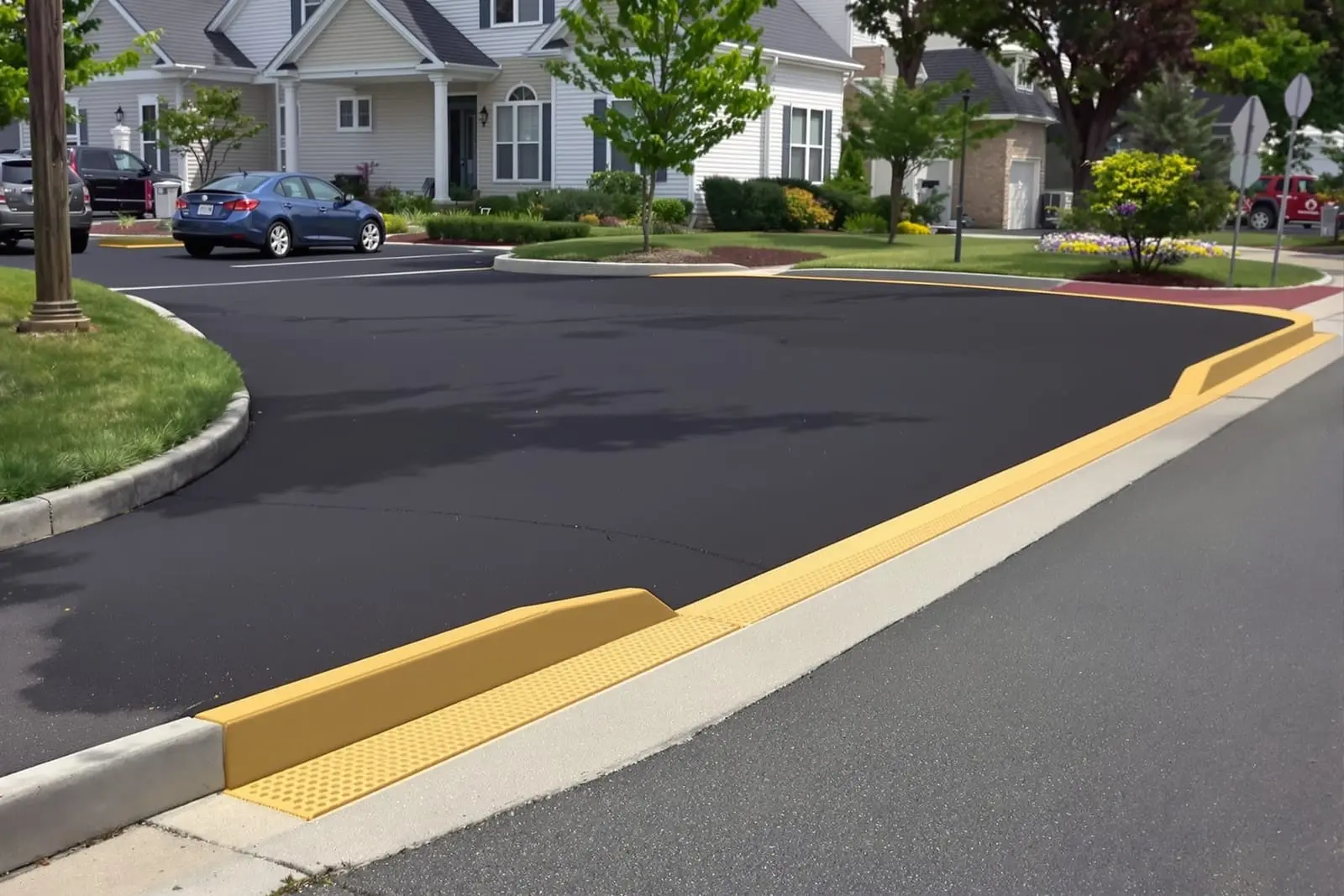
For perimeter and landscape curbs, we typically use concrete curbing installed over a compacted base, then tie it into the surrounding asphalt. These curbs keep vehicles out of grass, protect irrigation heads, and direct stormwater toward inlets instead of across sidewalks.
In parking areas, you have a choice between cast-in-place concrete curbs, concrete wheel stops, and asphalt-formed curbs. Concrete wheel stops are common in Austin because they are fast to install and easy to replace one at a time if damaged. However, they also get knocked loose by trucks and create tripping hazards if they move. Continuous curbs cost more up front but reduce ongoing maintenance problems.
For driveways and private roads, we often build low asphalt berms along the edges to keep vehicles on the pavement and help manage runoff. These are constructed with hot mix asphalt, shaped similarly to a small speed hump, and compacted. Because of the heat swings in Central Texas, we pay attention to joint details so expansion and contraction do not open gaps that let water undermine the edge.
When curbs and accessories are designed correctly, your striping stays clean, landscape beds survive, and drainage works as intended. When they are thrown in as an afterthought, you end up with ponding water, rutting along the edges, and constant minor repairs.
Asphalt Accessories: Sign Bases, Drains, and Surface Treatments
Beyond speed bumps and curbs, a lot of small details determine whether your lot feels organized and safe. Prestige Asphalt Austin can install several asphalt-related accessories at the same time as your traffic calming work.
Common items include:
• Sign post footings set in concrete, coordinated with speed bump locations so drivers actually see stop or yield signs.
• Precast or cast-in-place drain inlets at low points near bumps and curbs, so water does not sit against the asphalt after our typical Central Texas flash storms.
• Bollards set in concrete to guard fire hydrants, dumpster enclosures, or gas meters that sit close to traffic lanes.
We also coordinate surface treatments. When we install new speed bumps on an older lot, it often makes sense to re-stripe or apply sealcoat in the same mobilization so markings line up cleanly. Sealcoat does not go on new asphalt immediately, especially in Austin heat, so we schedule it around curing time and your busy hours.
Another accessory decision is material choice where asphalt meets concrete. In many Austin lots, concrete gutters or approaches already exist. We pay attention to these transitions, sawcut edges as needed, and apply bonding tack so the new asphalt adheres well. Ignoring that step guarantees early cracking along the joint.
Costs, Scheduling, and Austin-Specific Considerations
Pricing for asphalt speed bumps, curbs, and accessories depends on more than length. Prestige Asphalt Austin looks at:
• Site preparation: Removing old bumps, grinding down high spots, or repairing base failures adds time and material.
• Access: Tight courtyards, downtown garages, or gated communities can limit equipment size and increase labor.
• Traffic control: If we have to phase work so you keep lanes or drive-throughs open, we plan extra mobilizations.
• Markings and accessories: Thermoplastic striping, reflective markers, and bollards add to the total but can improve safety and durability.
Austin weather affects schedule and technique. In peak summer, surface temperatures on blacktop can exceed 150 degrees. We plan early morning or evening work when needed to ensure the mix does not cool too fast in the truck but also does not stay too soft and scuff under traffic. In cooler months, we watch overnight lows because fresh striping and sealers need dry conditions and certain temperatures to cure.
We also track rainfall patterns. Installing speed bumps just before a forecasted storm is a recipe for tracking and paint washout. We look for windows where we can pave, compact, stripe, and let everything set before heavy rain hits. For large properties, we may split the project into zones so you always maintain access while still meeting those weather windows.
What Austin Property Owners Should Decide Before Hiring
You can save time and money by clarifying a few points before you request quotes. First, decide the specific issues you want to solve. Are you seeing high speeds near a playground, cut-through traffic behind your building, or cars jumping curbs into landscaping? Sharing that with Prestige Asphalt Austin lets us recommend exact bump locations and curb types instead of just selling footage.
Second, consider who uses your property. Elderly residents, delivery vans, emergency vehicles, and sports car owners all experience speed bumps differently. We can adjust height, spacing, and type (for example, raised crosswalks instead of narrow bumps) to balance safety with comfort. For many Austin apartments and HOAs, we walk the site with a board member or manager to reach consensus before we paint any layout.
Third, think about your maintenance cycle. Installing speed bumps a month before you plan to repave the whole lot is wasted money. If your asphalt is already at the end of its life, we may recommend holding off on permanent traffic calming until after resurfacing, then tying bumps and curbs into the new layout.
Finally, ask any contractor how they will handle drainage, cooling time, and traffic reopening. You should know how long areas will be blocked, whether residents need to move their cars, and when heavy trucks can safely drive over new work.
When you are ready, Prestige Asphalt Austin can walk your property, mark proposed locations for speed bumps, curbs, and other accessories, and give you a clear plan that fits Austin conditions, your budget, and the way people actually use your site.
“
Professional speed bumps, curbs, and asphalt accessories, done right the first time, quality materials, honest pricing, and results that last.
Prestige Asphalt Austin
Speed Bumps, Curbs, and Asphalt Accessories Across Our Service Area