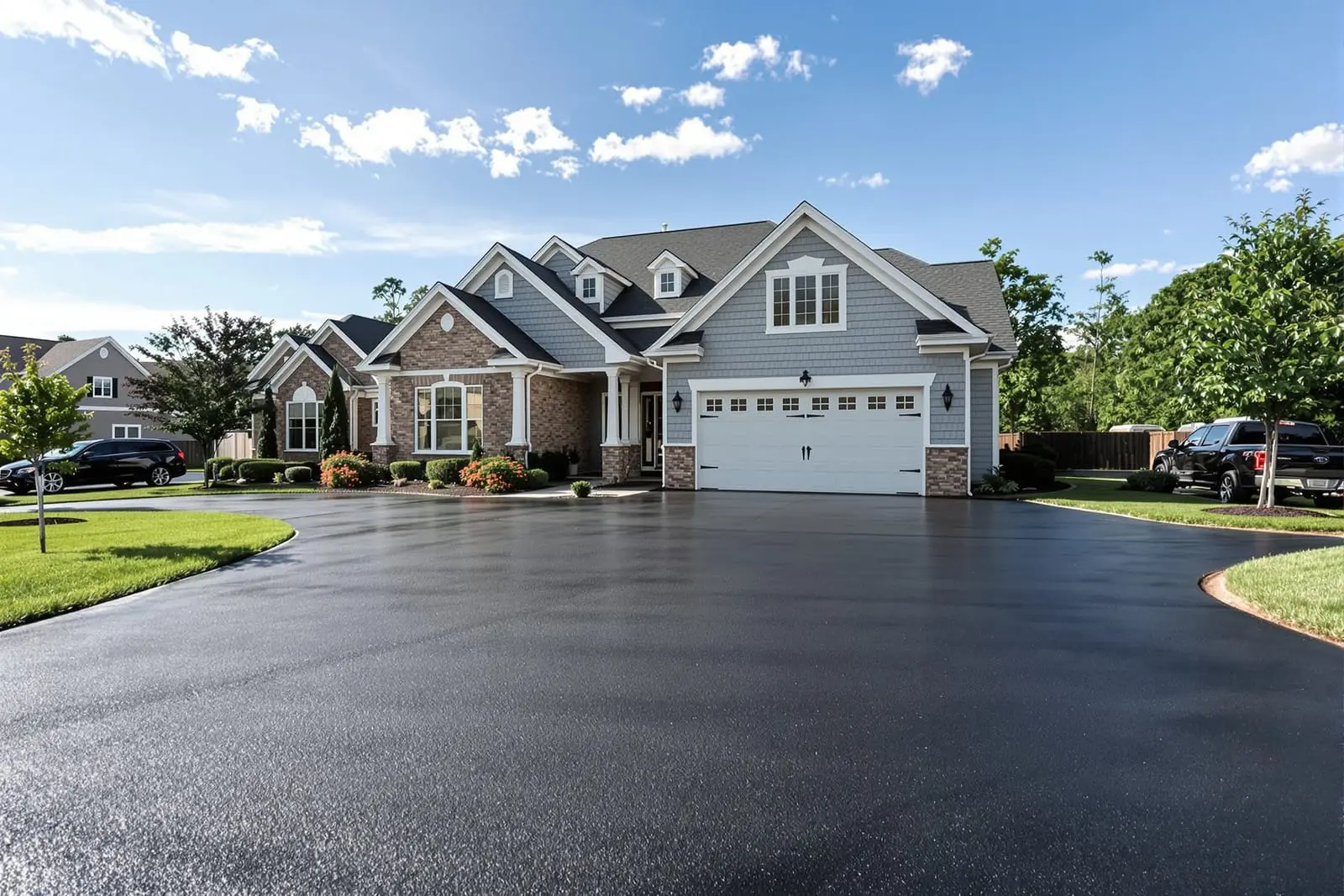
Prestige Asphalt Austin offers asphalt resurfacing in Austin, TX as a budget friendly way to renew tired driveways. We assess the existing pavement and base, repair problem areas, then apply a new asphalt overlay for a smooth, uniform finish. This process can extend the life of your driveway without the cost of full reconstruction. Homeowners trust us for honest recommendations, detailed preparation, and overlays that look great and perform well.
Prestige Asphalt Austin provides professional asphalt resurfacing throughout Austin, TX and the surrounding area. Our licensed, insured crew delivers safe, clean, on-time work with a free estimate before anything begins. Call (737) 265-1348 or request your free quote.
Asphalt resurfacing in Austin that extends pavement life, not just appearance
Asphalt resurfacing (also called an overlay) is one of the most cost-effective ways to restore a worn driveway, parking lot, or private road in Austin without paying for a full tear-out. Prestige Asphalt Austin focuses on resurfacing projects that actually add years of life to your pavement, not quick cosmetic fixes that fail after the first hot summer.
In Central Texas, our heat cycles, sudden downpours, and shifting clay soils put a lot of stress on asphalt. That is why we start every resurfacing job with a detailed surface and base evaluation. We look for structural failures, base movement, drainage issues, and reflective cracking that could show through a new layer. If an overlay is not the right solution for your driveway or lot, we will tell you and explain why, before you spend money on the wrong fix.
How our asphalt resurfacing & overlay process works
A proper asphalt overlay is more than just putting new blacktop on top of old. Here is how Prestige Asphalt Austin typically handles the process:
1. Site inspection and measurement. We walk the full area, mark drainage patterns, note ponding water spots, and measure thickness of the existing asphalt where possible.
2. Structural repairs. Areas with alligator cracking, potholes, or base failure are cut out with a saw, excavated, and rebuilt with new base and hot mix asphalt. Skipping this step is one of the main reasons overlays fail early.
3. Milling or edge grinding. To keep your new surface flush at garages, street tie-ins, ADA ramps, and drainage inlets, we mill or grind down the existing surface along transitions. This helps avoid trip hazards and puddles where new asphalt meets concrete.
4. Cleaning and prep. The surface is power swept and blown clean so the new asphalt can bond tightly. Any oil spots are treated with a primer so they do not bleed through or cause delamination.
5. Tack coat application. We apply a uniform tack coat (a bonding asphalt emulsion) over the old surface. This is essential in Austin’s heat because it keeps the overlay and existing asphalt locked together when temperatures spike.
6. Asphalt overlay placement. Hot mix asphalt is delivered from a local plant and spread using a paving machine for consistent thickness and slope. We choose mixes designed for Central Texas conditions so the surface stands up to UV, heat, and traffic.
7. Compaction. Steel drum and pneumatic rollers compact the new asphalt to the specified density. Proper compaction limits future rutting and helps seal out water.
8. Striping and finishing. For parking lots we re-stripe to match the previous layout or update it to current ADA requirements. Driveways and private drives are finished with clean edges and transitions to existing concrete or gravel.
Project types we resurface in the Austin area
Prestige Asphalt Austin works on a wide range of resurfacing and overlay projects throughout Austin and surrounding communities like Round Rock, Pflugerville, Cedar Park, and Kyle.
Common resurfacing jobs include:
• Residential driveways that are 10 to 20 years old with surface cracking but still have a solid base.
• Small business and retail parking lots that need a fresh surface, new striping, and better traffic flow without shutting down for a full reconstruction.
• Church and school lots that require work in tight time windows (weekends, holidays, or summer) with clear, safe access for students and visitors.
• Private roads in neighborhoods or on ranch properties that have become rough or rutted but are still structurally sound.
By focusing on the condition of your existing pavement, traffic patterns, and drainage, we can recommend whether a standard overlay, a leveling course plus overlay, or only spot repairs are appropriate. This avoids overspending on full replacement when it is not needed, or under-investing in an overlay where the base is already failing.
What affects asphalt resurfacing cost in Austin
Neighbors often compare price per square foot, but the real cost of asphalt resurfacing in Austin is driven by several specific factors:
• Thickness of the overlay. Residential driveways may only need 1.5 to 2 inches of new asphalt. Heavier-use parking lots and private drives with delivery trucks may require 2 to 3 inches or even multiple lifts.
• Amount of base repair. If 5 percent of your lot needs dig-out and base replacement, your cost will be different than a lot with no structural failures. We itemize these repairs so you can see what is driving the price.
• Milling and transitions. Tying into city streets, existing concrete, and drainage structures can add milling and handwork time, which affects labor cost.
• Access and downtime. Tight access, limited staging area, or requirements to keep part of a lot open can add phases and traffic control, which slightly increases project time.
• Striping and ADA upgrades. If you are resurfacing a commercial property in Austin, you may choose to update ADA-compliant parking, signage, and fire lane markings at the same time.
We always provide clear, written estimates that separate base repairs, milling, overlay thickness, and striping, so you can compare options and prioritize work if you need to phase the project over multiple years.
Material and design choices for overlays in Central Texas
Not every overlay uses the same asphalt mix or design. Prestige Asphalt Austin chooses materials and layout based on your use and budget.
For residential driveways we typically use a dense graded hot mix that balances a smooth finish with good durability under light vehicle traffic. Where driveways slope steeply, we pay close attention to texture and compaction so you get traction when the surface is wet.
For commercial parking lots and private roads we often specify a slightly stronger mix and may include a leveling course to correct depressions before the final surface layer. This helps reduce standing water that can break down asphalt and cause premature cracking.
In high-visibility properties such as retail centers or office buildings, we can design the layout of parking spaces and traffic aisles during resurfacing to improve circulation and safety. This might include adding dedicated loading zones, clearer fire lanes, or marked pedestrian paths from parking to the front door.
If your property is in an area with heavy clay soils or near drainage channels, we may suggest additional edge support or localized drainage fixes at the same time as the overlay so the new surface is not undermined from the sides.
Local considerations: Austin weather, drainage, and rules
Asphalt resurfacing in Austin has a few local wrinkles that out-of-town contractors sometimes overlook.
Heat and UV. Our summers are hot and dry, with long stretches over 100 degrees. We schedule paving and compaction in appropriate time windows so the mix does not cool too quickly or become too soft. We also choose mixes that can tolerate this heat and resist raveling and tracking.
Storm drainage. Austin’s heavy downpours can turn small low spots into long-term ponding areas that weaken asphalt. Before resurfacing, we identify low spots and may install a leveling course or adjust slopes to encourage proper runoff to existing drains or swales.
City and county ties. If your project involves tying into a city street or right of way, we follow City of Austin and Travis County requirements on transitions and elevations. For HOAs and commercial properties, we can help you prepare basic scope descriptions and diagrams that boards often require before approving overlay work.
HOA standards. Many Austin neighborhoods have driveway appearance rules or color expectations. While asphalt is generally black, the finish and edge details can affect curb appeal. We work with homeowners and HOA boards to plan phasing so streets are not blocked unnecessarily and standards are met.
What to expect when you hire Prestige Asphalt Austin
We want resurfacing to be predictable for you and your tenants, customers, or family.
Timeline and access. Most residential driveways are completed in one day, with light vehicle access usually available within 24 hours and full curing over several days. Commercial lots are often done in sections so your business can stay open. We provide a clear phasing and access plan before work begins.
Communication. You will have a single point of contact at Prestige Asphalt Austin who explains the work, confirms start times, and keeps you updated on weather delays. For larger properties we can provide notices to place on doors or send to tenants.
Quality control. During paving and rolling, our crew checks thickness and compaction and looks for any surface flaws that need immediate correction. We review transitions to concrete, street entries, and drainage paths before leaving.
After-care. We explain realistic expectations for a resurfaced lot or driveway in Austin’s climate, including when to consider sealcoating, how to handle small surface cracks that may appear over time, and what to avoid (for example, using pointed jack stands on fresh asphalt). Our goal is for your overlay to deliver its full expected life, not just look good on day one.
“
Professional asphalt resurfacing & overlays, done right the first time, quality materials, honest pricing, and results that last.
Prestige Asphalt Austin
Asphalt Resurfacing & Overlays Across Our Service Area