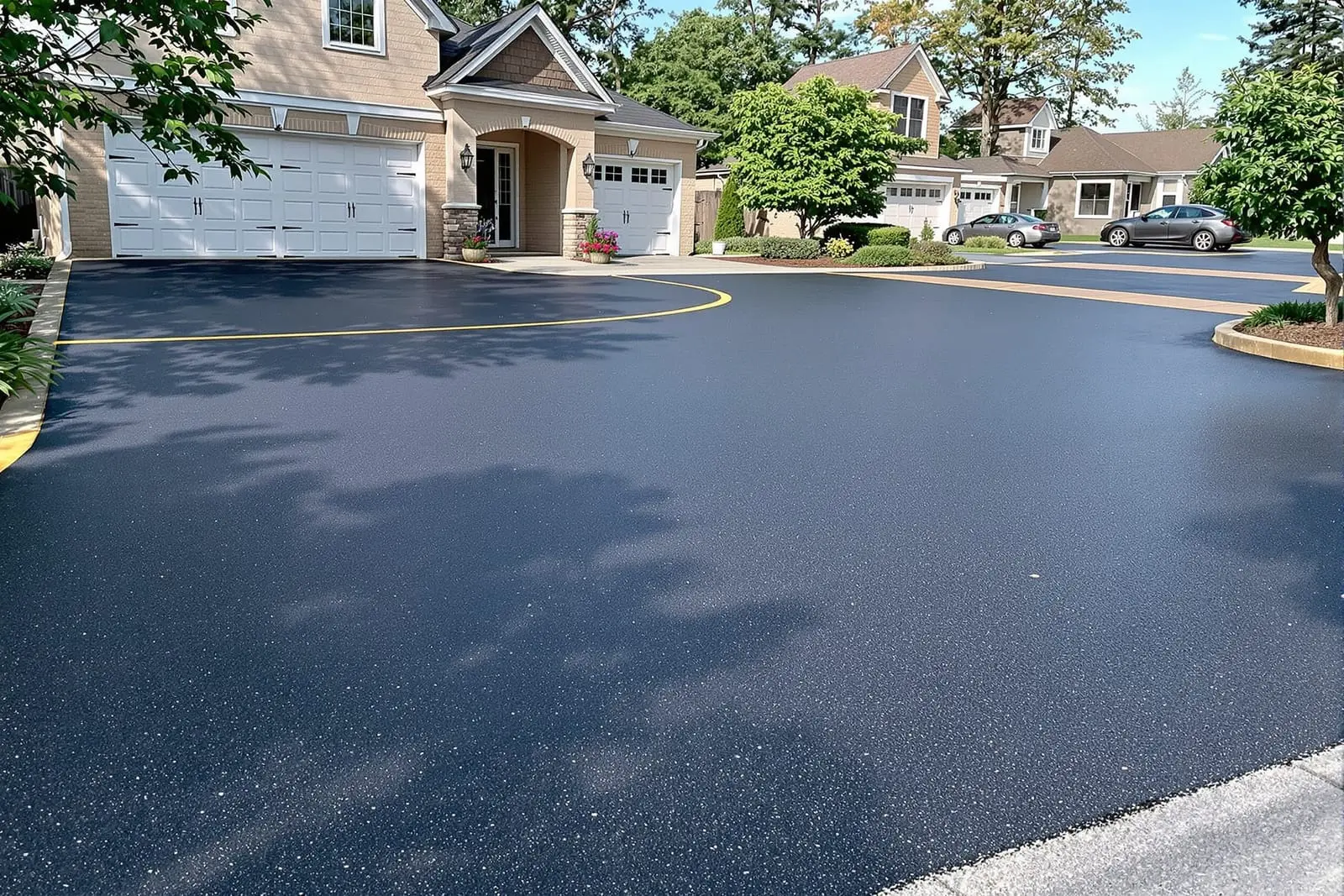
Prestige Asphalt Austin offers commercial asphalt resurfacing in Austin, TX to renew aging parking lots and drive lanes without full reconstruction. We repair failing areas, level low spots, and apply a new asphalt overlay for a fresh driving surface. This approach improves appearance and function while controlling costs. Property managers and owners rely on our team for honest assessments, careful preparation, and overlays that perform under daily traffic.
Prestige Asphalt Austin provides professional commercial asphalt resurfacing throughout Austin, TX and the surrounding area. Our licensed, insured crew delivers safe, clean, on-time work with a free estimate before anything begins. Call (737) 265-1348 or request your free quote.
Commercial Asphalt Resurfacing in Austin That Is Built Around Local Conditions
Commercial asphalt resurfacing is not a cosmetic touchup. It is how you restore a worn parking lot or roadway to a safe, smooth, and professional surface without paying for a full tear out. Prestige Asphalt Austin focuses on resurfacing for retail centers, office parks, industrial yards, HOA streets, and churches across the Austin area.
In Central Texas, your asphalt does not just age. It bakes in 100 degree heat, then takes on sudden thunderstorms and occasional cold snaps. That cycle opens up raveling, alligator cracking, and depressions around high traffic areas like drive lanes and dumpster pads. Our resurfacing and overlay process is built around these specific conditions so you do not waste money putting a thin cap over a base that is already failing.
When we look at a site, we are asking one key question: can this pavement structurally support an overlay, or does some of it need full-depth repair first? The answer to that question is what protects your investment for more than a couple of summers.
How Our Commercial Asphalt Resurfacing & Overlay Process Works
Prestige Asphalt Austin follows a defined sequence on every commercial asphalt resurfacing project so operations on your property are interrupted as little as possible.
1) Site walk and core checks: We start with a detailed walk of your lot or roadway, flagging heavy cracking, standing water, and rutting. On larger projects or older pavements, we can take core samples to confirm existing asphalt thickness and base condition. This tells us if a standard 1.5 to 2 inch overlay will hold up under your traffic.
2) Milling and transitions: Before any new asphalt goes down, we mill key areas so the finished surface meets concrete entries, ADA ramps, and gutter lines cleanly. On Austin sites we almost always mill at approaches to busy streets so trucks are not climbing a bump to enter or exit.
3) Base and patch repair: Any spots where the asphalt is broken up in a spiderweb pattern or where trucks have created deep ruts need to be cut out. We saw cut, remove the failed section, compact the base, then install new full-depth asphalt before the overlay. Skipping this step is the fastest way to end up with reflective cracking.
4) Tack coat: Once prep is done, we apply a uniform tack coat between the old surface and the new lift of asphalt. This adhesive is what bonds the overlay to your existing pavement so it acts as one slab instead of two layers that can slide or separate.
5) Paving and compaction: We install the new asphalt mat with a commercial paver to control slope and thickness. For most commercial overlays in Austin we use a 3/8 or half inch aggregate mix that balances durability and smoothness. Steel drum and pneumatic rollers compact the mat to the specified density so you get a tight, long-wearing surface.
6) Striping and reopening: After proper cooling, we restripe the lot according to your existing layout or a new design that can improve traffic flow or add ADA stalls. Most sites are ready for light traffic within 24 hours, with heavy truck traffic scheduled after the asphalt has fully set.
Overlay Thickness, Mix Types, and Options for Different Commercial Uses
Not every commercial overlay is the same. What you need for a small professional office in South Austin is not what a distribution yard in Pflugerville needs.
Overlay thickness: Typical commercial asphalt resurfacing is 1.5 to 2 inches compacted. For light duty parking lots with mostly passenger vehicles, 1.5 inches is often enough if the base is sound. For heavy delivery zones, fire lanes, and trash truck routes, we recommend 2 inches or more, sometimes in two lifts, to resist rutting and shoving.
Mix design: In our area, a TXDOT style Type D or Type C surface mix is common, but we adjust aggregate size and binder content based on use. High turning areas like drive-throughs benefit from a slightly stiffer mix that resists scuffing under hot weather. Shaded or cooler microclimates on a site may call for a slightly different binder approach.
Drainage and slope: Many of the resurfacing calls we get in Austin involve standing water that eats away at the pavement and creates liability issues. When we overlay, we review slope and add subtle corrections with leveling courses so water moves to inlets or edges instead of sitting in wheel paths.
Surface textures and appearance: For retail and multifamily properties, a smooth, consistent finish with crisp striping is usually the priority. For industrial sites, slip resistance and long-term durability typically outweigh appearance. We can also phase overlay work to keep certain entries or lanes open if your site cannot shut down altogether.
Common Asphalt Problems in Austin and When Resurfacing Makes Sense
Property managers often ask if resurfacing is worth it or if they are throwing money at an asphalt lot that is already too far gone. Prestige Asphalt Austin looks at the pattern, depth, and spread of the damage, not just the age of the pavement.
Good candidates for commercial asphalt resurfacing include:
• Widespread surface cracking that has not yet broken fully through the pavement.
• Moderate raveling where the surface aggregate is loosening but the base feels solid.
• Cosmetic oxidation that makes the lot look gray and tired, but traffic does not cause deep depressions.
Warning signs that you may need more than a simple overlay:
• Alligator cracking in wheel paths or loading zones, which usually means base failure.
• Large areas that stay soft after rain, a clue that water is trapped in, or under the structure.
• Repeated patching in the same locations, which indicates structural issues rather than surface wear.
For many Austin properties, the best solution is a combination of full-depth repairs in the worst spots, then an overlay across the entire lot or travel lanes. This approach keeps your costs below full reconstruction while stopping the cycle of constant patching and re-striping.
Cost Drivers and How We Control Your Project Budget
Commercial asphalt resurfacing in Austin is priced mainly by square footage and overlay thickness, but those are not the only factors that affect your budget. Understanding the drivers helps you compare quotes fairly.
Existing condition: If your lot only needs minor patching and milling at tie-ins, resurfacing is straightforward. The more base repairs, undercutting, and leveling courses a site needs, the higher the cost. We itemize these areas on our proposals so you see exactly where your money is going.
Access and phasing: Active shopping centers along I-35 or MoPac usually require nighttime or phased work so tenants can keep operating. Night work, traffic control, and multiple mobilizations add cost, but they also prevent revenue loss for your tenants. We work with you to choose phasing that balances disruption and budget.
Haul distances and disposal: Removing milling and failed asphalt has a disposal cost, and distance to approved facilities matters. Because we work across Austin and the surrounding suburbs regularly, we plan haul routes and loads to keep that portion of the budget under control.
Material choices: Upgrading from a thinner to a thicker overlay, or specifying a more robust mix in high stress areas, adds cost up front but often prevents future patching. During estimating, we will show you the price difference between a minimum spec overlay and a more durable design so you can decide what fits your long term plans for the property.
What to Expect When You Hire Prestige Asphalt Austin
When you bring Prestige Asphalt Austin out to look at your commercial resurfacing project, you get a straight evaluation, not a preset package. We walk the site with you, discuss how your tenants use each portion of the pavement, and build a scope that matches your traffic load, appearance needs, and budget.
Scheduling: We work around business hours, school calendars, and delivery schedules as needed. For many commercial properties we set up 2 or 3 phases so sections of the lot stay open while others are being milled or paved.
Communication: You will know in advance when each phase starts, which areas will be coned off, and when traffic can return. Our crews on site have clear instructions and a project lead you can find quickly if anything needs adjustment.
Finish quality: After the overlay is down and compacted, we handle striping, ADA markings, and any signage changes. Before we leave, we walk the site with you, checking for low spots, rough transitions, or clean up needs.
If you manage or own a commercial property in the Austin area and your asphalt is showing age, we can tell you within one visit whether commercial asphalt resurfacing and overlays are the right move, or if a different repair strategy will serve you better.
“
Professional commercial asphalt resurfacing & overlays, done right the first time, quality materials, honest pricing, and results that last.
Prestige Asphalt Austin
Commercial Asphalt Resurfacing & Overlays Across Our Service Area