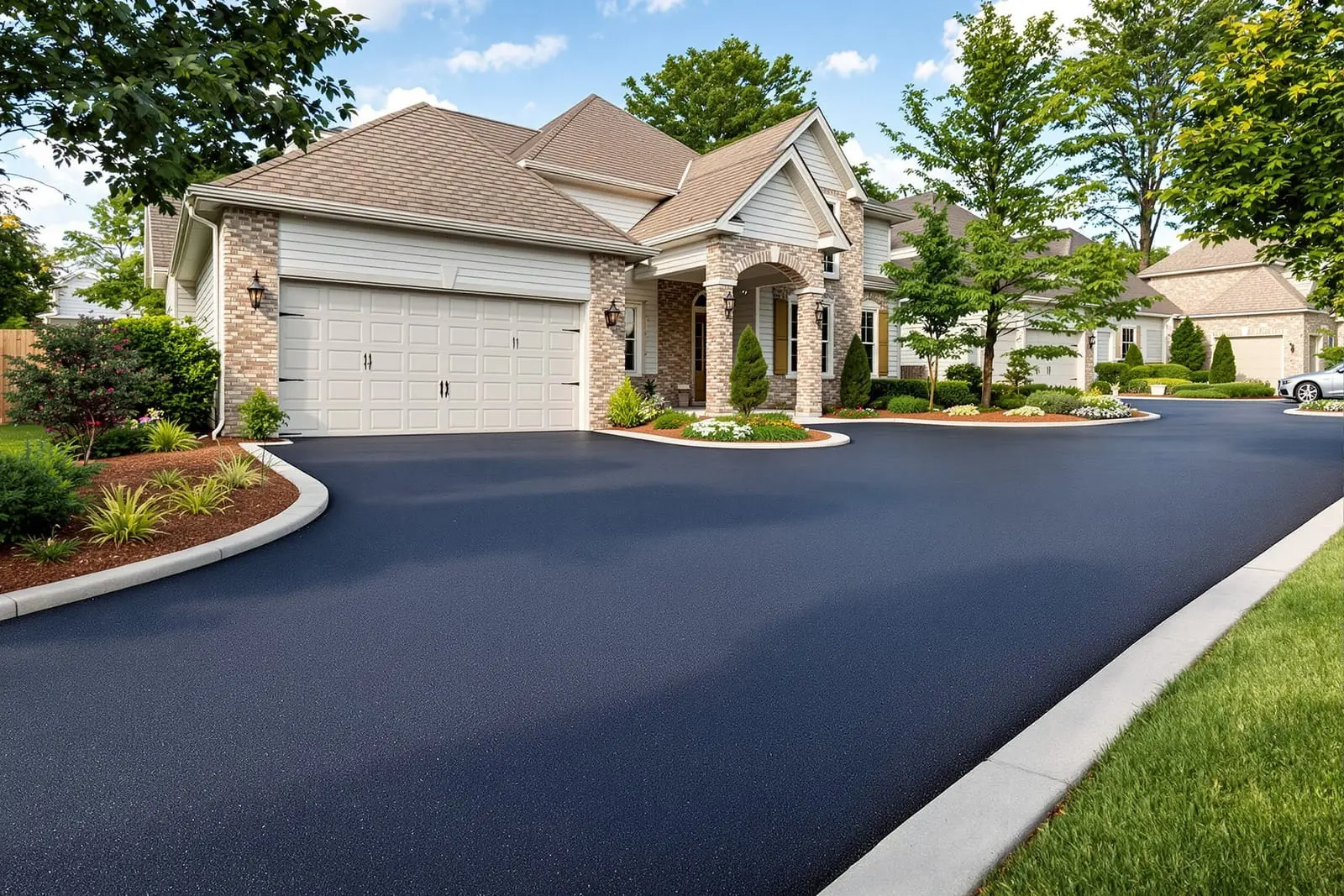
Prestige Asphalt Austin provides industrial asphalt paving in Austin, TX for loading docks, truck yards, and heavy equipment areas. We design pavements with proper thickness, aggregates, and compaction to handle frequent heavy loads. Our team evaluates subgrade conditions and drainage to prevent rutting and failure. Industrial clients rely on us for durable surfaces that keep operations moving and reduce maintenance interruptions.
Prestige Asphalt Austin provides professional industrial asphalt paving throughout Austin, TX and the surrounding area. Our licensed, insured crew delivers safe, clean, on-time work with a free estimate before anything begins. Call (737) 265-1348 or request your free quote.
Industrial Asphalt Paving for Heavy Loads in Austin
Prestige Asphalt Austin designs and installs industrial asphalt paving that holds up under real abuse: loaded semis turning in tight yards, forklifts tracking in heat and grit, and 24/7 traffic from industrial operations. Our focus is not just putting down blacktop, but building a pavement structure that matches your loads, drainage conditions, and future expansion plans.
We work with property managers, plant engineers, and general contractors throughout Austin and Central Texas on warehouses, distribution centers, manufacturing plants, equipment yards, and utility sites. Before we quote, we want to understand your axle loads, traffic patterns, fuel and chemical exposure, and any known subgrade issues on the property. That information directly affects the pavement section we recommend and the life cycle cost of your project.
With Central Texas heat and expansive clay soils, industrial asphalt paving in Austin has to be designed differently than in cooler, more stable climates. At Prestige Asphalt Austin we adjust section thickness, mix choice, and drainage to handle rutting, reflective cracking, and seasonal movement that are common in this region.
How We Design Heavy-Duty Pavement Structures
Every industrial asphalt paving project starts with the pavement design. Instead of a one-size-fits-all section, we calculate the structure based on your expected Equivalent Single Axle Loads (ESALs), local soil conditions, and drainage.
We typically recommend a multi-layer system: a compacted subgrade, a base course of crushed limestone or reclaimed asphalt, a heavy-duty binder course, and a high-stability surface course. For example, a tractor-trailer yard in Southeast Austin with clay soils might require 8 inches of flex base with 3 inches of binder and 2 inches of surface mix. A lighter industrial parking area on better soils could be designed with thinner lifts.
For clients who need maximum durability under slow, heavy turning loads, such as forklift aisles and loading docks, we often specify mixes with higher polymer content and stone-on-stone contact to resist shear. We can also incorporate geogrid or geotextile fabric when the subgrade is weak or pumping, so the structure distributes loads more effectively and reduces long-term maintenance costs.
Our team uses local geotechnical reports when available or arranges soil testing if needed. Knowing the difference between a lot on the Colorado River alluvium, a hillside on limestone, or a fill site over old construction debris is critical. That local knowledge allows Prestige Asphalt Austin to design a pavement that holds up to Austin conditions instead of relying on generic charts.
Site Evaluation, Subgrade Stabilization, and Drainage
Most heavy-duty asphalt failures can be traced back to problems with the foundation or water. That is why we spend as much time under the asphalt as we do on the surface.
We begin with a walk-through of the site, checking for soft spots, existing cracks that indicate movement, poor drainage paths, and areas where water already stands after a rain. In Austin, expansive clays can lose strength when wet, then shrink in extreme heat. If we see signs of this, we plan for undercutting and replacing poor soils, or for lime or cement stabilization to increase bearing capacity.
Water has to leave the pavement quickly. For industrial asphalt paving, we set slopes that actually work in the field, not just on paper. We pay particular attention to dock doors, trench drains, and transitions to existing concrete. Near the Colorado River or in low-lying parts of South Austin, we may recommend additional subgrade crown or underdrain systems if stormwater tends to linger.
Prestige Asphalt Austin also coordinates with your drainage or civil engineer when needed. If catch basins or inlets are undersized or set too high, we will point that out before paving so you are not stuck with standing water that shortens your pavement life and creates safety hazards for trucks and forklifts.
Heavy-Duty Asphalt Installation Process and Materials
Once the design and prep are complete, the actual paving process is tightly controlled. Industrial asphalt paving is less forgiving than light-duty work, because improper compaction or incorrect mixes show up quickly under heavy loads.
We install base material in uniform lifts, typically 4 inches at a time, and compact it to specified density with vibratory rollers. We proof-roll heavy-duty areas with loaded trucks when appropriate to reveal soft spots before asphalt is placed. Any deflection is corrected on the spot, not hidden under pavement.
For asphalt, we use TXDOT-spec mixes or custom industrial blends depending on the application. A common sequence is a heavy binder course for strength followed by a finer surface course that provides smoother rolling and better fuel resistance. Around fuel islands, dumpsters, or chemical loading areas, we may specify higher binder content and polymer-modified asphalt to resist softening and stripping.
Temperature and timing matter in Central Texas heat. We schedule truck deliveries to avoid mix cooling in traffic, particularly when working on the east side or I-35 corridors with heavy congestion. Paving is planned so joints run where traffic stresses are lowest, such as outside main wheel paths. Prestige Asphalt Austin crews use steel drum and pneumatic rollers in specific patterns to achieve density and flush out roller marks that could hold water or create weak lines.
Cost Drivers for Industrial Asphalt Paving in Austin
Budget for industrial asphalt paving is driven by more than just square footage. The main cost factors are structural thickness, subgrade correction, access and phasing, and special performance requirements.
Structural thickness is tied to your truck counts, axle loads, and whether traffic is channelized or spread out. A cross-dock terminal with constant turning in tight corners will need a heavier pavement section than a distribution lot where trucks move mostly straight. That added asphalt and base directly affects material and hauling costs.
Subgrade and base work can vary widely across Austin. A site over good limestone in North Austin may require only minimal proof-rolling and base improvement. A site with deep clay or undocumented fill in East Austin could need undercut and replacement, lime stabilization, or thicker base rock to achieve reliable support. Those decisions are where a detailed site evaluation from Prestige Asphalt Austin pays off and prevents surprise change orders.
Access and phasing also matter. Working in a live facility often requires night or weekend work, traffic control, and phased construction so operations can continue. This can add to labor and mobilization costs, but it is often still cheaper than shutting down an entire yard or plant. We provide options that show the cost difference between full closure and phased approaches so you can decide what makes operational sense.
Special needs like high-visibility striping, embedded conduit, bollard installation, thicker sections at dock aprons, and concrete transitions will also influence pricing. We break these items out clearly so you can value-engineer the project without guessing what you are giving up.
Common Industrial Pavement Issues and How We Prevent Them
Industrial pavements in Austin typically fail from predictable patterns: rutting in wheel paths, shoving in tight turning areas, reflective cracking from poor bases, or potholes where water infiltrates. Our approach is to design and build specifically to avoid these issues rather than just patch them later.
Rutting under trucks and forklifts is often caused by mixes that are too soft, insufficient structural thickness, or weak subgrade. We combat this by using stable mix designs with proper aggregate structure and binder content, verifying compaction, and adjusting section thickness where we know loads will concentrate, such as at forklift cross-aisles and scale approaches.
Shoving and tearing in high-shear areas, such as tight corners or steep grades, are addressed by strengthening the upper lifts and sometimes using a transition to concrete at the most heavily stressed docks or ramps. We also orient paving joints away from turning paths where possible.
Water-related failures are minimized through thoughtful drainage, tight joint construction, and attention to tie-ins around inlets and concrete pads. In parts of Austin with older infrastructure, we see many industrial yards where water stands at the bottom of small depressions. When resurfacing, Prestige Asphalt Austin mills or levels those areas first, instead of simply overlaying, so water no longer sits and accelerates failure.
For clients with existing damage, we can core and evaluate the present structure, then propose partial-depth or full-depth reclamation strategies. This is often more cost effective than repeated patching and gives you a known pavement section going forward.
Planning, Scheduling, and Partnering With Your Operations
Industrial projects move on tight schedules, and your yard or plant cannot sit idle while work drags on. Prestige Asphalt Austin works with your operations team to phase paving so you can keep trucks moving and staff safe.
Early in planning, we ask about peak shipping times, shift changes, and critical access points. We then develop a phasing plan that identifies which sections can be taken out of service and when. This might involve working nights, weekends, or over holiday periods to avoid disrupting your business. We coordinate with your safety manager to define traffic control, temporary signage, and safe pedestrian paths.
For new construction, we communicate with your GC and other trades so heavy equipment is not running over freshly placed bases or asphalt. In Austin, weather can change quickly. We track forecasts closely and will not place critical lifts when rain or extreme temperatures would compromise quality. If there is a weather delay, you get clear updates and revised timelines instead of wondering when crews will return.
Our goal is to deliver industrial asphalt paving that supports your operations for years, with clear expectations about performance and maintenance. When you call Prestige Asphalt Austin, you get a local team that understands Central Texas conditions and industrial demands, and that treats your facility layout and schedule as seriously as the pavement itself.
“
Professional industrial and heavy-duty asphalt paving, done right the first time, quality materials, honest pricing, and results that last.
Prestige Asphalt Austin
Industrial and Heavy-Duty Asphalt Paving Across Our Service Area