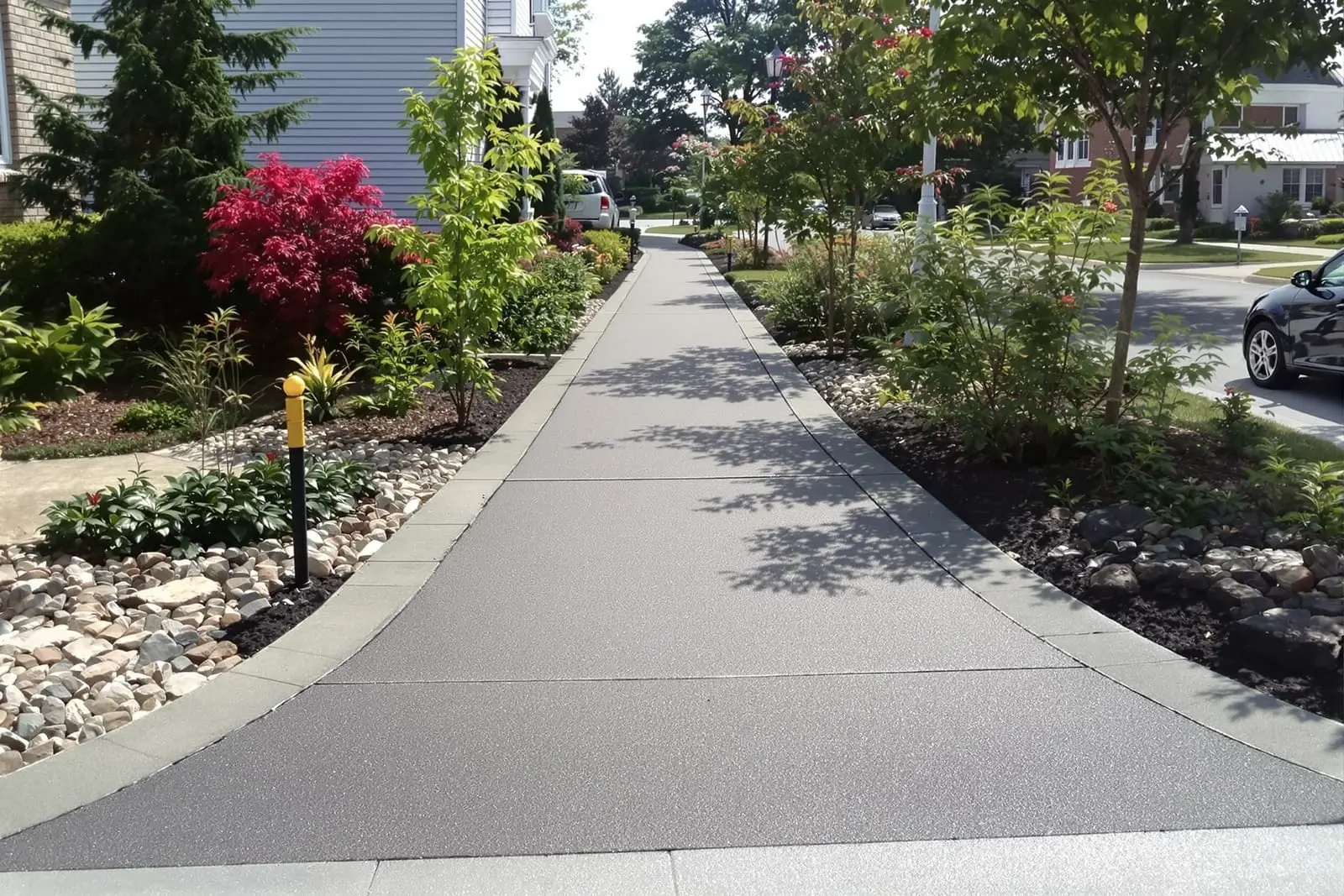
Prestige Asphalt Austin installs asphalt sidewalks in Austin, TX along with multi use trails and pathways for campuses, parks, and commercial sites. We design routes for accessibility and smooth travel for pedestrians, strollers, and bicycles. Our team handles layout, grading, and paving to integrate paths with existing parking lots and buildings. Owners and facility managers trust us to deliver safe, consistent walking surfaces with long term performance.
Prestige Asphalt Austin provides professional asphalt sidewalks throughout Austin, TX and the surrounding area. Our licensed, insured crew delivers safe, clean, on-time work with a free estimate before anything begins. Call (737) 265-1348 or request your free quote.
Asphalt sidewalks, pathways, and trails tailored to Austin
If you want a smooth, low‑maintenance walking surface that can handle Austin’s heat, asphalt sidewalks and pathways are one of the best options. At Prestige Asphalt Austin, we design and build walkways for residential yards, neighborhood sidewalks, HOA trails, school campuses, and small commercial sites.
We start by walking the route with you. We look at how people already move through the space, shade patterns during the day, and where water naturally flows when it rains. That tells us where an asphalt sidewalk will feel natural, where we need curves instead of straight lines, and where we might need extra drainage or a wider section for strollers and bikes.
For Austin properties, we typically recommend a compacted base from 4 to 8 inches thick, then a 2 to 3 inch asphalt surface, depending on foot traffic and any light vehicle use like golf carts or maintenance carts. Side yard walkways usually need less structure, while HOA trails or school sidewalks get a thicker base and surface so they last longer and resist cracking in our summer heat.
Throughout the design conversation, we talk about how the walkway will really be used. Do kids ride scooters? Will landscaping crews drive mowers across it? Are you trying to make a steeper area easier and safer to walk? Those details help Prestige Asphalt Austin customize thickness, slope, and edge support so the path works for you day to day, not just on paper.
How we build long‑lasting asphalt sidewalks in Austin’s climate
Central Texas weather is tough on paving. High summer temperatures, occasional freezes, and heavy storm events can damage a poorly built sidewalk fast. Our crews plan installation and materials around what actually happens in Austin, not a generic climate.
First, we handle layout. We mark the future walkway with paint and flags and double‑check with you before any soil is disturbed. Then we remove grass, roots, and weak soil to reach a firm subgrade. If we hit expansive clay, which is common around Austin, we may stabilize it with lime or cement, or replace some of it with better base material so the walkway does not shift as moisture levels change.
Next comes base construction. We use crushed limestone or flex base that compacts tightly. Using a plate compactor or roller, we compact in thin lifts so the base locks together. This is where many cheap installs fail. If the base is poorly compacted or too thin, the asphalt sidewalk will settle and crack after a couple of years of Austin rain and heat.
We then set forms or edge restraints where needed, especially near landscaping beds or transitions to grass. After that, we place hot mix asphalt while it is still at the right temperature, spread it to a consistent thickness, and compact it with a roller for large areas or a walk‑behind compactor in tighter spaces. We also pay close attention to cross‑slope, usually 1 to 2 percent, so water runs off instead of pooling on the walkway.
When the asphalt cools, we clean up edges, blend any soil back to the path, and advise you on when to start using it. In typical Austin weather, light foot traffic is usually okay within a few hours, but we will give you site‑specific guidance based on temperature and thickness.
Design options for pathways, trails, and everyday sidewalks
Asphalt pathways are more customizable than many people expect. Prestige Asphalt Austin can help you get the function you need and a look that fits your property, whether it is a backyard, a greenbelt trail, or a church campus.
Width is the first big decision. A basic residential walkway might be 3 to 4 feet wide so two people can pass each other. Neighborhood or park trails often work better at 6 to 8 feet, especially where walkers, joggers, and bikes share the path. For service access routes, we may go wider and increase thickness to handle small utility vehicles.
Curves and alignment matter too. Straight lines can be efficient, but gently curving sidewalks often feel more natural in Austin’s hilly and tree‑filled neighborhoods. We can route trails around existing oaks to avoid root damage or design elevated or reinforced sections where the path skirts a drainage area.
Surface texture is another choice. A tighter, smoother finish is nice for wheelchairs, strollers, and skateboards. In steeper sections or shady areas that stay damp, we can leave a slightly more textured finish to increase grip. We can also add reflectors, painted striping at crossings, or contrasting pavement at intersections with streets or parking lots for visibility.
Finally, we talk about how your asphalt sidewalks interact with the rest of your property. That means planning tie‑ins to existing concrete, setting asphalt slightly above surrounding turf so grass does not grow over the edges too quickly, and making sure sprinkler heads are adjusted so they do not erode the edges of the path.
What affects cost and lifespan of asphalt sidewalks in Austin
Homeowners and property managers often ask why two walkway quotes can be far apart in price. Most of the difference comes from what you cannot see once the project is finished: base depth, soil prep, and drainage planning.
Route length and width are the most obvious cost drivers. A longer or wider trail simply uses more material. The next factor is soil condition. Areas with soft or expansive clay may need more excavation and a thicker base. If your route crosses a low spot that stays damp after our big spring storms, we may recommend French drains, culverts, or a small bridge section, which adds cost but avoids repeated washouts.
Thickness is critical for lifespan. A very thin asphalt surface might save money upfront but will not handle years of Austin heat and random heavy rain. Prestige Asphalt Austin explains the tradeoffs clearly. For light residential foot traffic, 2 inches of asphalt on a good base can be fine. For HOA walking trails or school sidewalks, we usually recommend 2.5 to 3 inches to resist cracking and rutting.
Accessibility and layout can also affect price. Tight backyards with no gate access may require smaller equipment and more hand work. Steep slopes or the need to meet ADA guidelines for public sidewalks and trails can require extra grading time.
If you want your asphalt sidewalks to last 15 to 20 years, a little maintenance matters. In Austin, we typically suggest sealing walkways every 3 to 5 years, depending on sun exposure and traffic. Sealcoating protects the surface from UV damage and minor water intrusion. Filling small cracks early, especially after winter cold snaps, keeps water out of the base and prevents larger failures that are much more expensive to fix.
What to know before you hire an asphalt sidewalk contractor
Choosing someone to build your asphalt sidewalks is about more than just price per foot. There are a few questions Austin property owners should ask that will quickly reveal whether a contractor is planning a short‑term patch or a durable walkway.
Ask how thick the base and asphalt surface will be, and what material they use for base. If they cannot answer clearly or plan less than 4 inches of compacted base for a main sidewalk or trail, that is a red flag for our local soils and weather.
Find out how they handle drainage along the path. In Austin, a storm can drop several inches of rain in a day. Your contractor should talk about slopes, possible low areas, and how they will prevent water from sitting on or under the asphalt. If your project is near a creek or greenbelt, make sure they understand any city or HOA restrictions as well.
It also helps to ask about timing. Summer installs may need to start earlier in the day to avoid asphalt cooling too fast, while late fall work must consider overnight lows so the mix compacts properly. Prestige Asphalt Austin schedules sidewalk projects around the forecast whenever possible, and we will let you know if there is a weather risk that could affect quality.
Finally, review how repairs would be handled in the future. Even a well‑built asphalt sidewalk can develop a crack near a tree root or at a utility cut. A reliable contractor can explain how to sawcut and patch small sections without replacing the entire pathway. When you work with Prestige Asphalt Austin, we keep records of your project layout and materials so future touch‑ups are easier and more accurate.
“
Professional asphalt pathways, sidewalks, and trails, done right the first time, quality materials, honest pricing, and results that last.
Prestige Asphalt Austin
Asphalt Pathways, Sidewalks, and Trails Across Our Service Area